Introduction: cornhole as an inclusive game
One of the biggest advantages of the cornhole game is how accessible it is. You don’t need to be super athletic, you don’t need complicated equipment, and you can easily adapt the game to different levels and limitations. In this guide, we’ll show who can play cornhole and how to make the game as inclusive as possible.
Want to learn the basics first? Then check out What is cornhole? – Basics & game overview or the beginner’s guide, and then also have a look at Cornhole for children, teens and adults.
Cornhole for beginners and non-athletes
Cornhole is ideal for people who don’t consider themselves “sporty”:
- you throw from a fixed position, without running or jumping;
- the movement is calm and controlled;
- you can build up the game step by step, for example with shorter distances and lower scores.
The simple cornhole rules (bag on board = 1 point, bag in hole = 3 points) make it easy to get started quickly. You can find a clear explanation at Cornhole overview: rules, setup and scoring.
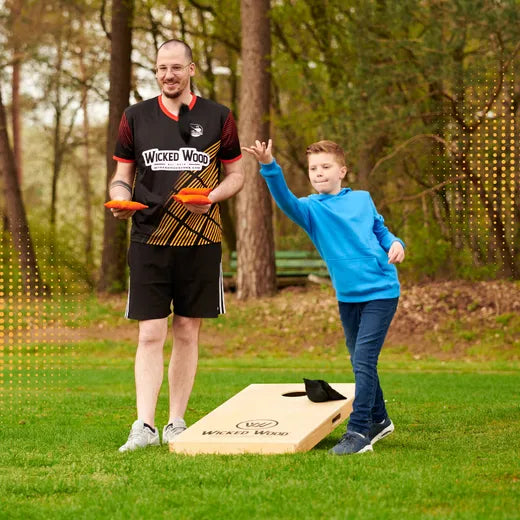
Children and young people
For children and young people, cornhole is a fun way to practice motor skills, concentration and teamwork. By:
- shortening the distance;
- playing with lighter bags;
- and using simple house rules,
you ensure that everyone experiences success. In Cornhole for all ages you can read more about adjustments for each age group.
Seniors and care facilities
Cornhole is also very suitable for seniors and residents of care facilities:
- the game stimulates light movement and coordination;
- there is plenty of room for social interaction and fun;
- if necessary, you can play while seated or with aids.
On Cornhole for seniors and care facilities we go into more detail with practical tips and variations for this target group.
Cornhole for people with disabilities
With small adjustments, you can also make the cornhole game more accessible for people with a physical or (mild) intellectual disability:
- let players throw while seated or from a wheelchair;
- shorten the distance and if necessary use lighter bags;
- adjust the scoring (for example, only points for bags on the board);
- work with clear, visually supported explanations.
The most important thing is that everyone can participate at their own pace and that the focus is on fun, not perfection.
Inclusive game formats and teams
Inclusive play also means thinking about how you form teams and agree on rules:
- create mixed teams of children, adults and seniors;
- give less mobile players small advantages (for example, a slightly shorter distance);
- avoid extremely competitive formats if they scare participants off;
- focus on teamwork, encouragement and shared goals.
You can find more ideas at How cornhole creates community and connection and Mental and physical benefits of cornhole.
Frequently asked questions about cornhole and accessibility
Is cornhole suitable for people who are not athletic?
Yes, cornhole is actually very suitable for people who don’t consider themselves athletic. The movement is calm and controlled and you can easily adjust the distance and difficulty level to the players’ abilities.
Can people in a wheelchair play cornhole?
Definitely. By adjusting the distance and possibly using lighter bags, people in a wheelchair can easily join in. The most important thing is that they are seated stably and have enough space to throw.
How do I make cornhole fun for a mixed group?
Work with mixed teams, adjust distances and use simple, clear rules. That way the cornhole game stays fun for children, adults, seniors and people with disabilities all in one group.
Is cornhole safe for seniors?
Yes, provided you take balance, surface and distance into account. Ensure a stable surface, don’t make players walk too far and offer the option to play while seated. See also Cornhole for seniors.
Where can I find more information on how cornhole works?
The basics of the game are explained on What is cornhole? and in the beginner’s guide. Rules and scoring are explained at Cornhole overview: rules, setup and scoring.